Turn your idea into a working app with a local Austin team. Mobile app development near 5900 Balcones Drive with honest pricing and real delivery timelines.
You have the idea. You have sketched it on napkins, pitched it to friends, and maybe even raised some seed money. Now you need someone to actually build it. You have talked to offshore teams with cheap rates and confusing time zones, and you have talked to big agencies with slick portfolios and eye-watering retainers. Neither feels right. Soft Synapse has been handling mobile app development near 5900 Balcones Drive STE 100 for years, and the truth is: most app projects fail not because the idea is bad, but because the development process was broken from day one.
What Mobile App Development Actually Involves
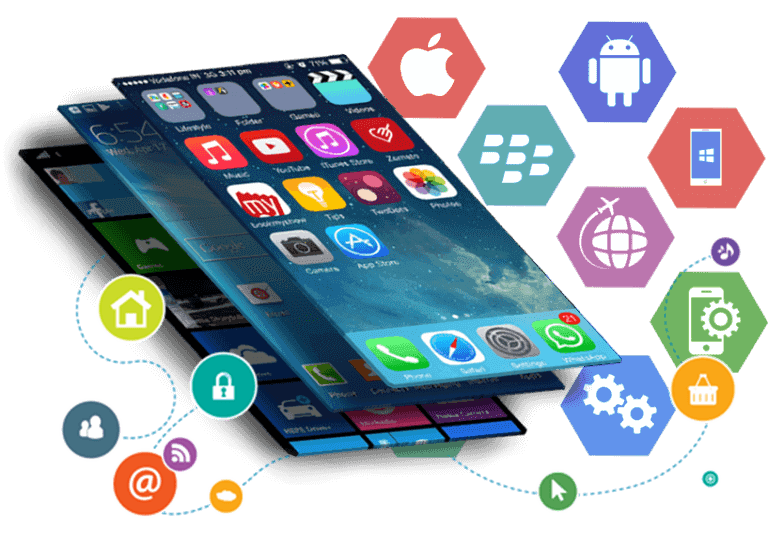
Mobile app development is the process of designing, building, testing, and launching a software application that runs on iOS, Android, or both platforms. It includes user experience design, interface design, backend architecture, API development, database design, third-party integrations, security implementation, testing protocols, and ongoing maintenance. In the Austin tech corridor, where startups compete with established players like Dell, IBM, and a growing wave of venture-backed companies, the app must be built for scale, security, and user retention from the start. A prototype that works for ten users will crash when it hits a thousand if the architecture was not planned for growth.
Residential Mobile app development near 5900 Balcones Drive In the Austin market near the Balcones Drive corridor, we have noticed that most founders assume the hardest part is the coding. It is not. The hardest part is defining what the app should actually do, who it is for, and how it will make money before a single line of code is written. We routinely see projects where six months and $100,000 were spent building features that users do not want, while the core value proposition was never tested. A good development partner challenges your assumptions, runs user interviews, builds a minimum viable product, and measures actual engagement before expanding the scope.
The technology stack matters. Native development with Swift for iOS and Kotlin for Android delivers the best performance and platform integration but requires separate codebases and higher maintenance. Cross-platform frameworks like React Native or Flutter reduce development time and cost but may have limitations with complex animations or hardware-specific features. Progressive web apps offer the lowest barrier to entry but lack the distribution power and device access of native apps. The right choice depends on your timeline, budget, user expectations, and whether you need features like Bluetooth, camera access, or push notifications.
The Real Challenge in Austin’s Tech Corridor
Austin’s tech scene moves fast and costs are rising. The Balcones Drive area sits in the heart of the city’s northwest tech corridor, surrounded by startups, accelerators, and established tech companies competing for the same talent pool. Developer salaries have climbed steadily, which means hourly rates for quality work are not cheap. The market is also saturated with freelancers and agencies that overpromise and underdeliver — selling a polished portfolio while outsourcing the actual work to junior developers overseas.
A client Best Mobile app development near 5900 Balcones Drive area reached out when their first app build crashed two weeks after launch. They had hired an overseas team at $25 per hour that promised a full-featured social platform in three months. The code was spaghetti, the database could not handle concurrent users, and the payment integration failed under real transaction volume. We had to audit the entire codebase, rebuild the backend with proper API architecture, refactor the frontend for performance, and implement automated testing that the original team had skipped. The rescue cost more than building it right the first time, and the startup lost six months of market momentum.
Here is the objection most development shops never answer: founders worry that hiring a local team means paying premium rates for the same result they could get cheaper elsewhere. That concern is valid because price does not always equal quality. The difference is not geography. It is process. A local team that communicates clearly, understands your market, responds in your time zone, and takes accountability for the outcome will deliver faster and with fewer rewrites than a cheaper team that disappears for days and returns work that misses the mark. The real cost of development is not the hourly rate. It is the total cost including fixes, delays, and lost opportunity.
How Soft Synapse Approaches It Differently
We start every project with a discovery phase that lasts one to two weeks and includes user research, competitive analysis, technical architecture planning, and a detailed scope document with fixed pricing.Professional Mobile app development near 5900 Balcones Drive In the Austin market, where many founders are pitching investors on tight timelines, this step feels like a delay. It is not. It prevents the scope creep, budget overruns, and feature bloat that kill most app projects. We have seen too many startups burn through their runway building features that sounded good in a brainstorm but did not move the user engagement needle.
Working with clients in the Austin area, our team found that the most common hidden problem is technical debt accumulated by cutting corners to hit a demo deadline. A quick-and-dirty backend, hardcoded values instead of configurable settings, and skipped security measures make for an impressive pitch deck but a fragile product. We build every project with production-grade standards from the first sprint: encrypted data storage, OAuth authentication, rate-limited APIs, and automated testing pipelines. That foundation costs slightly more upfront and saves exponentially when you scale.
The competitor gap here is specific and underappreciated: we include post-launch analytics and iteration planning as part of our standard engagement. Most development shops hand you the app, take the final payment, and move to the next client. We install analytics frameworks that track user behavior, measure retention funnels, and identify drop-off points. Then we meet monthly to review the data and prioritize improvements based on actual usage, not guesswork. That ongoing partnership is why our clients’ apps evolve instead of stagnating after launch.
We also maintain transparency through shared project management tools, weekly standups, and direct access to the developers building your product. No account managers filtering communication. No black boxes where work disappears for weeks. You see the backlog, the sprint progress, and the code commits in real time.
Practical Tips: What to Know Before You Decide
Before you hire any development team, ask for a detailed scope document that includes user stories, wireframes, technical architecture, third-party dependencies, and a testing plan. If a team gives you a one-page estimate with a single number and no breakdown, they are either inexperienced or planning to figure it out as they go. Both are expensive.
In the Austin startup ecosystem, we have noticed that most founders do not budget for ongoing maintenance and iteration. They plan for the initial build and assume the app will run itself. It will not. Operating system updates break features. Security patches are mandatory. User feedback demands changes. A realistic budget allocates 20 to 30 percent of the initial development cost annually for maintenance, updates, and incremental improvements. Planning for this prevents the panic six months after launch when something breaks and there is no money to fix it.
One local market-specific tip: Austin’s investor community values traction metrics over feature lists. If you are pitching to local VCs or angel groups, an app with a thousand engaged users and a clear retention curve is worth more than an app with fifty features and no users. Build for engagement first, scale second, and polish third. We help founders prioritize features that drive user acquisition and retention, not just features that look impressive in a demo.
Also, do not assume that a bigger team means faster delivery. Adding developers to a project increases communication overhead, coordination costs, and the risk of inconsistent code quality. A focused team of three to four senior developers often delivers faster and cleaner than a bloated team of ten. The right size depends on the project complexity, not the founder’s anxiety about speed.
Building an App That Actually Works in Austin’s Market
Austin is full of people with great ideas. The ones that succeed are built by teams that understand the difference between a prototype and a product, between a demo and a platform. The right development partner does not just write code. They help you validate assumptions, measure outcomes, and build something that can grow with your user base.
Soft Synapse handles mobile app development near 5900 Balcones Drive STE 100 with a process built on honest scoping, production-grade engineering, and post-launch partnership that turns your idea into a business. If you are ready to stop talking about your app and start building it, schedule a discovery session and see what a transparent development process actually looks like.
FAQs
How much does mobile app development cost in Austin?
A minimum viable product typically runs $30,000 to $80,000 depending on complexity, platforms, and integrations. A full-featured consumer app can reach $150,000 to $400,000. We provide fixed-price estimates after discovery so you know the total cost before development starts.
How do I know an app development company is actually legit?
Check their portfolio for live apps you can download and test. Ask for references from founders who have launched products with them. Verify they have senior developers on staff, not just junior coders managed overseas. A legitimate team will explain their process, show you their tools, and let you talk directly to the engineers.
How long does it take to build a mobile app?
A focused MVP takes three to four months from kickoff to app store submission. A more complex platform with custom backend, payment processing, and third-party integrations can take six to twelve months. We break projects into two-week sprints with deliverables you can test at each stage.
Should I build for iOS, Android, or both?
That depends on your target audience and budget. If your users are primarily in the US, iOS often makes sense first. If you need broader global reach, Android has larger market share. Cross-platform development with React Native or Flutter lets you launch on both with a single codebase, though native development offers better performance for graphics-heavy or hardware-dependent features.
What happens after my app launches?
Launch is the beginning, not the end. You need analytics to understand user behavior, updates to fix bugs and add features, and maintenance to keep up with operating system changes. We offer ongoing support packages that include monthly reviews, priority bug fixes, and feature development sprints based on user data and business goals.