Trusted SaaS development and AI solutions in Austin, TX help businesses automate workflows, scale platforms, improve insights, and support smarter growth!
Businesses increasingly need digital platforms that can grow with their users, organize large amounts of data, automate repetitive work, and deliver useful insights. Soft Synapse provides software development services from its Austin, Texas location, including SaaS development and artificial intelligence and machine learning solutions for startups and established organizations. These two technologies can solve different but connected business needs. SaaS development creates cloud-based applications that customers or employees can access through the internet, while AI and machine learning can analyze data, recognize patterns, automate decisions, and support intelligent product features. Companies considering these technologies should begin with a clear business problem rather than adding features simply because they are new. User requirements, data quality, security, scalability, platform architecture, operating costs, and future growth all influence the final solution. This guide explains how SaaS development and AI solutions can help Austin businesses build practical digital products that remain manageable as their needs change.
Building Cloud-Based Products With SaaS Development
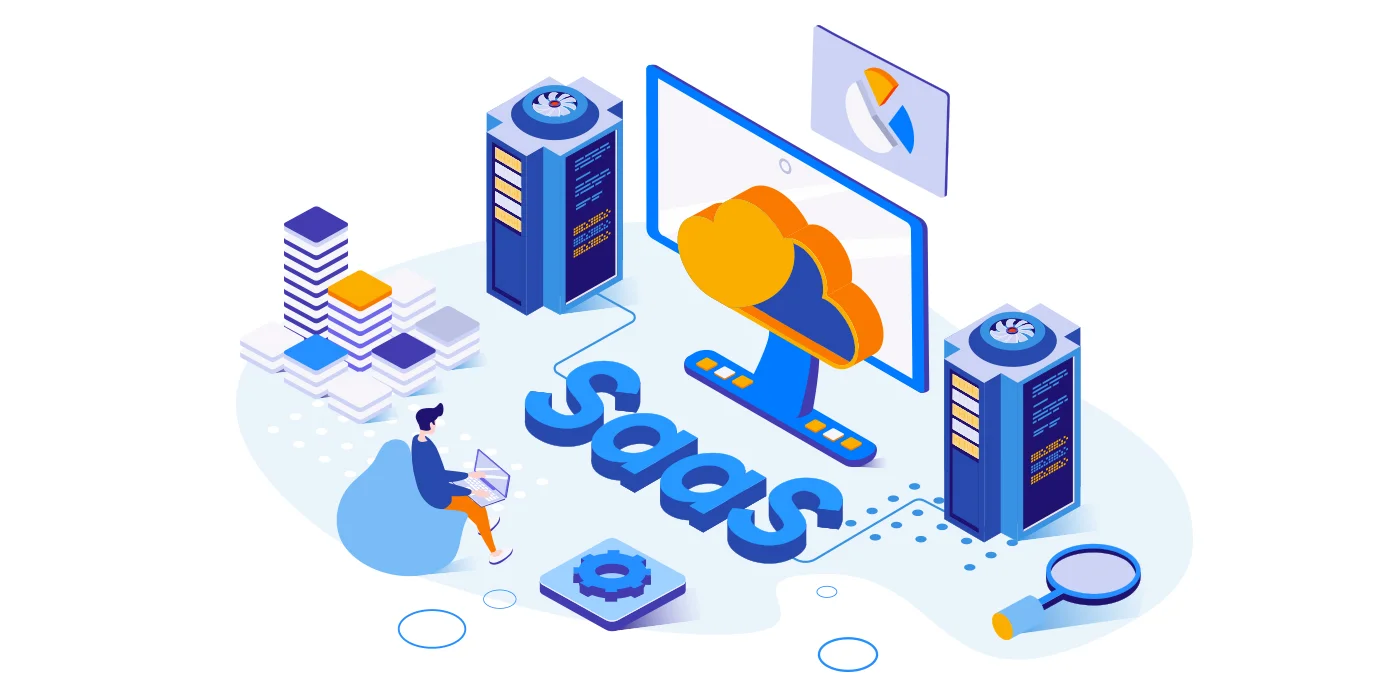
Professional SaaS development focuses on creating software that users can access online rather than installing and maintaining separate applications on individual devices.
A SaaS platform may support customer accounts, subscriptions, dashboards, business workflows, reporting, internal operations, or industry-specific functions.
The development process should begin by defining who will use the platform and what those users need to accomplish.
A startup may need a focused first product that solves one clear problem. An established company may be replacing an older internal application or moving existing software into a cloud-based environment.
Architecture should reflect those differences.
The platform should also be planned around expected user volume, data storage, permissions, account management, updates, and future features.
Building a solid foundation early can make later expansion easier without forcing the company to rebuild the entire product whenever requirements change.
SaaS Development for Austin, TX Businesses
Businesses seeking digital development in Austin, TX can use SaaS technology to create products that are accessible across different locations and devices.
Soft Synapse lists its business address at 5900 Balcones Drive in Austin and provides SaaS development for businesses that need scalable cloud-based platforms.
A local service company might use SaaS software to manage customers, appointments, billing, and reporting through one system.
A technology startup might build a subscription-based platform serving customers across several markets.
Another organization may need an internal application that allows different departments to work from the same information.
The strongest project should be based on how the business actually operates.
Before development starts, teams should map the main user roles, required workflows, essential data, account permissions, and the actions users need to complete.
That planning helps separate launch-critical features from ideas that can be added in later versions.
Custom SaaS Applications for Specific Business Models
Off-the-shelf software can work well when business processes are common and requirements are relatively simple.
Custom SaaS development becomes more useful when a company has workflows, customer experiences, or operating requirements that generic software cannot handle efficiently.
A custom platform can be designed around the company’s own processes rather than forcing employees to change how they work just to fit existing software.
For example, an organization may need specialized dashboards, unique account roles, automated approval processes, subscription controls, or industry-specific data management.
Custom development should still remain focused.
Building dozens of unnecessary features can increase development complexity and maintenance requirements.
The development team should identify the functions that create the most value and build the platform around those priorities.
Additional capabilities can be introduced as real users provide feedback.
Multi-Tenant SaaS Architecture
Many SaaS platforms serve several customers through the same application.
A multi-tenant architecture allows different organizations or account groups to use one platform while keeping their information and permissions separated appropriately.
This structure can make product management easier because updates can be deployed across the platform without maintaining a completely separate application for every customer.
However, account separation needs careful planning.
Users should only see the information and functions they are authorized to access.
Administrators may require broader permissions, while standard users receive more limited access.
Subscription levels can also affect which features are available.
These rules should be defined before development progresses too far because permissions influence database design, application logic, dashboards, and many other parts of the platform.
A well-organized account structure can make SaaS products easier to scale as more customers join.
Moving Existing Software Into a SaaS Model
Some businesses already have software that works but is difficult to maintain, update, or access remotely.
Moving an existing application into a cloud-based SaaS model may provide an opportunity to modernize the product without discarding every useful feature.
Migration should begin with an assessment of the existing system.
Developers need to understand the current application, databases, user accounts, workflows, dependencies, and data that must be preserved.
The migration plan should also identify which features still provide value and which parts of the older system should be redesigned.
Data transfer requires particular attention.
Records should be cleaned, mapped, and tested before the new platform becomes the primary system.
Businesses should also plan how users will transition from the old application to the new one.
Training, documentation, and staged deployment can reduce disruption during that change.
Adding Intelligence With AI and Machine Learning
Professional AI and ML development can help businesses analyze data, identify patterns, automate certain decisions, and create more intelligent product experiences.
Soft Synapse lists predictive analytics, natural language processing, computer vision, recommendation systems, anomaly detection, and custom model development among its AI and machine learning capabilities.
The right use case depends on the available data and the business problem.
A company should not begin by asking, “Where can we add AI?”
A stronger question is, “Which repeated decision, prediction, classification, or analysis could be improved with data?”
That approach keeps the project connected to measurable business needs.
AI projects also depend heavily on data quality.
Incomplete, inconsistent, or poorly organized data can limit the usefulness of even a technically advanced model.
Predictive Analytics for Business Planning
Predictive analytics uses historical data to identify patterns that may help estimate future outcomes.
Businesses can apply these models to areas such as demand forecasting, customer behavior, operational planning, or risk analysis.
The quality of the prediction depends on the information available.
A company with several years of consistent historical records may have a stronger starting point than one whose data is scattered across spreadsheets and unrelated systems.
Teams should define exactly what they want to predict before model development begins.
A broad goal such as “predict customer behavior” is difficult to evaluate.
A specific goal, such as estimating which customers are likely to stop using a subscription, creates a clearer measurement target.
The model should then be validated against real results to determine whether its predictions are useful enough to support business decisions.
Natural Language Processing for Customer Interaction
Natural language processing allows software to work with written or spoken language.
Businesses may use NLP for chatbots, text classification, sentiment analysis, document processing, or other language-based tasks.
A customer service platform could classify incoming messages and route them to the correct team.
Another system might summarize large amounts of text or identify recurring topics within customer feedback.
The implementation should match the importance of the decision being automated.
Some tasks can operate with minimal human review, while higher-impact decisions may require employees to verify AI-generated outputs.
Language models and classification systems should also be tested using the type of information the business actually receives rather than only generic examples.
Real-world testing helps reveal ambiguous language, unusual customer wording, and edge cases that may affect accuracy.
Computer Vision and Visual Data
Computer vision allows software to interpret images or video.
Soft Synapse identifies object detection, pattern recognition, and automated visual analysis among its AI capabilities.
Potential applications can include quality-control processes, image classification, visual inspection, and other tasks involving large amounts of visual information.
Before building a computer vision system, businesses should determine whether they have enough relevant images or video for development and validation.
Image quality and labeling can influence model performance.
The environment also matters.
A model trained using clear studio images may perform differently when used with low-light mobile photos or industrial camera feeds.
Testing should reflect the actual conditions in which the system will operate.
Computer vision can reduce manual review in suitable workflows, but the expected accuracy and consequences of errors should be clearly defined.
Recommendation Systems and Personalization
Recommendation engines can help platforms present products, services, content, or features that are more relevant to individual users.
These systems typically use information such as past behavior, preferences, interactions, or similarities between users and items.
A SaaS platform with a large content library could recommend resources based on previous activity.
An online service could suggest features that match a customer’s behavior.
Personalization should remain useful rather than intrusive.
Businesses should be clear about what information is collected and how it supports the user experience.
Recommendation systems also need enough activity data to produce meaningful results.
New platforms may initially have limited information, which can affect recommendation quality.
The product plan should account for how recommendations will work while user data is still developing.
Detecting Unusual Patterns With AI
Anomaly detection focuses on identifying behavior or data that differs from normal patterns.
Businesses may use this approach for fraud monitoring, system health, unusual transactions, or operational issues.
The main challenge is defining what “unusual” actually means.
Not every rare event represents a problem.
Models should be trained and evaluated using real business patterns so they do not generate excessive alerts that employees eventually ignore.
The system should also provide enough context for people to understand why an event was flagged.
Human review can remain important, especially when a false alert could affect a customer account or business decision.
AI works best in these situations when it helps teams focus attention rather than replacing judgment without oversight.
Combining SaaS Platforms With AI Features
SaaS and AI can be especially useful when developed as parts of one product strategy.
A SaaS application provides the interface, accounts, workflows, data storage, and business functions that users interact with.
AI can add predictive, classification, recommendation, or automation features to that platform.
For example, a subscription platform might use machine learning to identify usage patterns and flag accounts that may need additional support.
An internal operations platform could classify incoming requests automatically.
A reporting system might identify unusual activity that deserves review.
The AI component should fit naturally into the existing workflow.
Users should understand what the feature does and how its output should influence their next action.
Adding AI simply to market the product as intelligent can create unnecessary complexity without improving the user experience.
Testing Before Deployment
Both SaaS applications and AI systems need structured testing before launch.
A SaaS product should be tested for user permissions, account creation, subscriptions, workflows, data entry, reporting, responsive behavior, and other essential functions.
AI features require additional validation.
Developers should measure whether models produce useful results using representative data.
Edge cases should also be tested because real users rarely behave exactly like development examples.
Performance matters as the number of users grows.
A platform that works well with a small test group may behave differently when hundreds or thousands of people use it.
Testing should therefore consider both functional correctness and expected scale.
Businesses should also define how bugs, inaccurate model outputs, and production issues will be monitored after deployment.
Planning for Long-Term Growth
SaaS platforms and AI systems continue evolving after launch.
New customers may require additional features, user volume can increase, and business workflows may change.
AI models may also need review as new data becomes available.
The architecture should allow reasonable expansion without building every possible future feature immediately.
Businesses should maintain documentation covering major platform decisions, user roles, data structures, model assumptions, and deployment processes.
Ongoing maintenance should include security updates, performance reviews, bug fixes, and evaluation of important AI outputs.
Soft Synapse provides both SaaS and AI development, allowing businesses to consider the underlying platform and intelligent features as connected parts of the same digital product.
Conclusion
SaaS development and AI solutions can help Austin businesses create cloud-based products that support users while making better use of operational and customer data.
A SaaS platform can provide centralized access, subscription management, account controls, dashboards, and scalable digital workflows.
AI and machine learning can add predictive analytics, natural language processing, computer vision, recommendations, and anomaly detection when those capabilities solve a real business need.
The strongest projects begin with clear requirements, reliable data, defined users, security planning, and measurable goals.
Businesses should build the essential platform first, test it carefully, and introduce advanced functionality where it improves an existing workflow.
By treating SaaS architecture and AI capabilities as parts of one practical product strategy, companies can develop software that supports current operations while providing room for future growth.
Frequently Asked Questions
What is SaaS development?
SaaS development involves creating cloud-based software that users access through the internet instead of installing and maintaining separate applications on individual devices.
What types of SaaS applications can businesses build?
Businesses can develop subscription platforms, customer portals, internal management systems, dashboards, workflow tools, reporting systems, and other cloud-based products.
What business problems can AI and machine learning address?
AI can support prediction, text processing, visual analysis, recommendations, anomaly detection, automation, and other data-driven tasks when suitable information is available.
Can AI features be added to a SaaS platform?
Yes. AI capabilities can be incorporated into SaaS products to support recommendations, predictions, classification, automation, or other intelligent workflows.
Why is data quality important for AI development?
AI models learn patterns from available data. Incomplete, inconsistent, or inaccurate information can reduce model reliability and make outputs less useful.
Should a business build every SaaS feature at launch?
Usually not. Starting with essential functions makes the platform easier to test and allows future features to be guided by real user behavior and business needs.